Website preview   ✦   The cat community is being prepared
←   Back to cat care
A whole world of cats

Meet the breeds.

From the sleek Bombay to the talkative Siamese, each cat has a story. Explore where these 22 breeds began, their familiar traits and the little things that make them special.

Every cat is an individual. Breed descriptions are general tendencies, not a guarantee of personality or health. Photographs show cats described as examples of each breed; cats come in many colours and patterns.
Bombay cat

✦   United States

Bombay

Their story. The Bombay was developed in the United States by Nikki Horner, who crossed Burmese cats with black American Shorthairs. She chose the name after Bombay, now Mumbai, in India.

Personality. Bombays are often described as affectionate, people-loving and playful. Their sleek black coat and copper or golden eyes give them a striking look.

Everyday care. A gentle brush, suitable play and cosy places to rest make a lovely routine. A black coat alone cannot tell you a cat’s breed: many wonderful black cats are moggies too.

More about Bombay cats ↗

Photo: Bombaycats / Wikimedia Commons · CC BY-SA 3.0 · cropped to fit.

Devon Rex cat

✦   Devon, England

Devon Rex

Their story. In 1960 a curly-coated kitten called Kirlee was born in Devon. His distinctive coat became part of the beginnings of the Devon Rex breed.

Personality. Often curious, sociable and lively, Devon Rex cats may enjoy play, climbing and following their people from room to room.

Everyday care. Their fine, wavy coats need gentle handling. They may feel the cold more than a thick-coated cat, so offer a comfortable, warm place to rest.

More about Devon Rex cats ↗

Photo: Marcey / Wikimedia Commons · Public domain · cropped to fit.

Abyssinian cat

✦   Early origins uncertain; developed in Britain

Abyssinian

Their story. The Abyssinian’s exact early ancestry is uncertain. Genetic evidence suggests possible ancestors from around the Indian Ocean, and the modern breed was developed in Britain.

Personality. Abyssinians are often described as active, intelligent and interested in what is going on around them. Many like to climb and explore.

Everyday care. Their short coats need gentle, occasional grooming. Provide safe climbing spaces, play and puzzle activities to suit the individual cat.

More about Abyssinians ↗

Photo: Oleg Royko / Wikimedia Commons · CC BY-SA 4.0 · cropped to fit.

Turkish Van cat

✦   Lake Van region, Türkiye

Turkish Van

Their story. The Turkish Van is associated with the Lake Van region in eastern Türkiye. Its traditional coat pattern is mostly white, with colour on the head and tail.

Personality. Turkish Vans are often lively, intelligent and affectionate. Some enjoy investigating water, although every cat has their own preferences.

Everyday care. Regular gentle brushing helps look after their semi-long coats. Safe places to climb and explore can be rewarding for an active cat.

More about Turkish Vans ↗

Photo: Helen Filatova / Wikimedia Commons · CC BY-SA 3.0 · cropped to fit.

British Shorthair cat

✦   Great Britain

British Shorthair

Their story. Developed in Britain from domestic shorthaired cats, these sturdy cats became popular at early British cat shows. The famous blue-grey coat is just one of their many colours.

Personality. Often described as calm and independent, they may enjoy being near their people as much as being on a lap. Of course, each cat has their own preferences.

Everyday care. A regular gentle brush can help care for their dense coat, along with play and a balanced diet.

More about British Shorthairs ↗

Photo: George E. Koronaios / Wikimedia Commons · CC BY-SA 4.0 · cropped to fit.

Maine Coon cat

✦   Maine, United States

Maine Coon

Their story. This longhaired breed is associated with the US state of Maine, where cats with thick coats became well known. Maine later named it the official state cat.

Personality. Maine Coons are often described as sociable, curious companions. Some enjoy following their people around and greeting them with little chirps or trills.

Everyday care. Their long coats benefit from regular grooming. Like every cat, they also need play and space to feel comfortable.

More about Maine Coons ↗

Photo: CupcakePerson13 / Wikimedia Commons · CC BY-SA 4.0 · cropped to fit.

Siamese cat

✦   Thailand, formerly Siam

Siamese

Their story. The Siamese is associated with cats from Thailand, once known as Siam. Pointed cats appear in historic Thai cat poems, and Siamese cats later delighted visitors at British cat shows.

Personality. Many Siamese are known for being sociable, curious and vocal; they may enjoy plenty of interaction with their people.

Everyday care. Short play sessions and interesting places to explore can help keep an inquisitive cat entertained.

More about Siamese cats ↗

Photo: MateusB2002 / Wikimedia Commons · CC BY-SA 4.0 · cropped to fit.

Ragdoll cat

✦   California, United States

Ragdoll

Their story. The Ragdoll was developed in California during the 1960s. A white longhaired cat called Josephine is part of the story of the breed’s beginnings.

Personality. Ragdolls are often described as relaxed and affectionate, though youngsters can be playful. Always let an individual cat choose how much handling they enjoy.

Everyday care. Their soft, semi-long coats need regular grooming, and they enjoy suitable play just like other cats.

More about Ragdolls ↗

Photo: Shadowmeld Photography / Wikimedia Commons · CC BY-SA 4.0 · cropped to fit.

Bengal cat

✦   United States

Bengal

Their story. The Bengal was developed in the United States. Its early history includes crosses between domestic cats and the Asian leopard cat; the breed’s name reflects that ancestry.

Personality. Bengals are often described as active and inquisitive. Many enjoy investigating their surroundings and playing with their people.

Everyday care. Opportunities for safe play, climbing and exploration can help give an energetic cat things to do.

More about Bengals ↗

Photo: Pieter Lanser / Wikimedia Commons · CC BY 2.0 · cropped to fit.

Persian cat

✦   Historically associated with Persia, now Iran

Persian

Their story. Longhaired Persian cats are historically associated with Persia, although their exact early origins are uncertain. The modern breed was developed further at cat shows in Britain.

Personality. Persians are often described as gentle and fond of a calm environment, while still having their own unique personalities.

Everyday care. Their long coats need frequent grooming. Some Persians have very flat faces that can cause health problems, so seek veterinary advice about their individual needs.

More about Persians ↗ Flat-faced cat welfare ↗

Photo: Si Griffiths / Wikimedia Commons · CC BY-SA 3.0 · cropped to fit.

Norwegian Forest cat

✦   Norway and Scandinavia

Norwegian Forest

Their story. Known in Norway as the skogkatt, or forest cat, these sturdy cats developed in Scandinavia. Their thick coats helped them cope with a cold climate, and they appear in Norwegian folklore.

Personality. Often friendly and playful, they may enjoy being near their people while keeping a little independence. Many enjoy climbing and exploring.

Everyday care. Gently groom the coat regularly, with extra attention when it sheds. Safe climbing places and play can help keep them entertained.

More about Norwegian Forest cats ↗

Photo: Orosz Márk / Wikimedia Commons · CC0 1.0 · cropped to fit.

Siberian cat

✦   Siberia, Russia

Siberian

Their story. Siberians are native to Russia, where their thick coats helped protect them from harsh winters. Their coat often changes with the seasons and they can be slow to reach full size.

Personality. Siberians are often described as affectionate, clever and playful. Many enjoy climbing, puzzles and spending time with their people.

Everyday care. Regular combing helps keep their dense coat comfortable; they may need more during seasonal shedding. All cats can trigger allergies, including Siberians.

More about Siberians ↗

Photo: Sibirela / Wikimedia Commons · CC BY-SA 3.0 · cropped to fit.

Russian Blue cat

✦   Associated with northern Russia

Russian Blue

Their story. Russian Blues are associated with the port of Arkhangelsk in northern Russia and are sometimes called Archangel cats. Their short, dense blue-grey coats have silvery tips.

Personality. They are often described as affectionate with familiar people, playful and sometimes reserved with strangers. Each cat will settle in at their own pace.

Everyday care. A gentle regular brush, play and a quiet place to retreat can make a lovely routine.

More about Russian Blues ↗

Photo: Doug Miller / Wikimedia Commons · CC BY 2.0 · cropped to fit.

Burmese cat

✦   Thai–Myanmar border; developed in the US and Britain

Burmese

Their story. Burmese cats have roots near the present-day Thai–Myanmar border. The modern breed was developed in the United States from a brown cat called Wong Mau, and later developed in Britain too.

Personality. Often lively, affectionate and people-oriented, Burmese cats may enjoy games and company. Individual cats still have their own likes and dislikes.

Everyday care. Their short coats benefit from gentle brushing, and they need chances to play and rest. Very flat faces can cause health issues, so ask a vet about an individual cat’s needs.

More about Burmese cats ↗ Flat-faced cat welfare ↗

Photo: TheEaterofCorn / Wikimedia Commons · CC BY-SA 4.0 · cropped to fit.

Birman cat

✦   Origins uncertain; recognised in France

Birman

Their story. A traditional legend links Birmans with temple cats in Burma, now Myanmar, though their early origins are uncertain. They were recognised and shown in France in the 1920s.

Personality. Birmans are often described as gentle and sociable. Their blue eyes, darker face and white paws make them distinctive, but their personalities are individual.

Everyday care. Their silky coats need regular gentle combing, plus the same play, comfortable spaces and routine vet care as other cats.

More about Birmans ↗

Photo: Drvoriba / Wikimedia Commons · CC BY-SA 4.0 · cropped to fit.
Sphynx cat

✦   Canada

Sphynx

Their story. Although named after the Egyptian sphinx, the modern breed’s story began with a naturally hairless kitten born in Ontario, Canada, in 1966. Many have a fine, soft down rather than a full coat.

Personality. Sphynx cats are often described as curious, energetic and affectionate, with their own preferences for attention and play.

Everyday care. Their lack of fur can make them prone to cold, sunburn and skin problems. Ask your vet about suitable skin care and warmth; some cats also have inherited heart problems.

More about Sphynx cats ↗ Hairless cat welfare ↗

Photo: Sonnqor / Wikimedia Commons · CC BY-SA 4.0 · cropped to fit.

Cornish Rex cat

✦   Cornwall, England

Cornish Rex

Their story. The breed’s story began in Cornwall in 1950, when a curly-coated kitten called Kallibunker was born on Bodmin Moor.

Personality. Cornish Rex cats are often described as lively and sociable. Many enjoy games and being involved in family life.

Everyday care. Their short, fine coats need gentle handling and they appreciate comfortable, warm places to rest. They can still cause allergies.

More about Cornish Rex cats ↗

Photo: Alexandre Gonçalves / Wikimedia Commons · CC BY-SA 4.0 · cropped to fit.

British Longhair cat

✦   Great Britain

British Longhair

Their story. The British Longhair shares a history with the British Shorthair. Crosses with longhaired cats, including Persians, helped introduce the longer coat.

Personality. They are often described as calm and affectionate, although each cat has their own idea of the perfect amount of company.

Everyday care. Regular, gentle combing helps prevent tangles. Offer play and a balanced diet, just as for any cat.

More about British Longhairs ↗

Photo: Fanta3 / Wikimedia Commons · CC BY-SA 4.0 · cropped to fit.

American Shorthair cat

✦   United States

American Shorthair

Their story. This breed was developed in the United States from domestic cats, including cats that travelled with early settlers and helped keep rodents away.

Personality. Often described as easy-going and curious, many enjoy both play and time close to their people.

Everyday care. Their short coats benefit from gentle brushing. Give them opportunities to play and explore at their own pace.

More about American Shorthairs ↗

Photo: Dustin Warrington / Wikimedia Commons · CC BY-SA 2.0 · cropped to fit.

Balinese cat

✦   United States

Balinese

Their story. The Balinese was developed in the United States from longhaired Siamese cats. Its name was inspired by the graceful dancers of Bali.

Personality. Many are described as sociable, curious and talkative, enjoying games and time with their people.

Everyday care. Regular gentle grooming helps care for their silky coats. They also benefit from suitable play and quiet spaces.

More about Balinese cats ↗

Photo: Pomewgranate / Wikimedia Commons · CC BY-SA 4.0 · cropped to fit.

Oriental Shorthair cat

✦   England

Oriental Shorthair

Their story. Developed in England during the 1950s, Orientals share ancestry with Siamese cats and come in many colours and patterns.

Personality. They are often described as playful, inquisitive and vocal, with an interest in what their people are doing.

Everyday care. A gentle brush and interesting play can suit their short coats and active nature. Every individual also needs somewhere peaceful to retreat.

More about Oriental Shorthairs ↗

Photo: Felinlove / Wikimedia Commons · CC BY-SA 4.0 · cropped to fit.

Turkish Angora cat

✦   Türkiye

Turkish Angora

Their story. Associated with Ankara, formerly Angora, in Türkiye, these cats are known for their silky coats. They can be white or come in other colours.

Personality. Turkish Angoras are often described as clever, affectionate and energetic. Many enjoy being part of the household’s activities.

Everyday care. Gentle grooming helps remove loose hair, while play and safe climbing places can keep a curious cat occupied.

More about Turkish Angoras ↗

Photo: SlowPhoton / Wikimedia Commons · CC BY-SA 4.0 · cropped to fit.

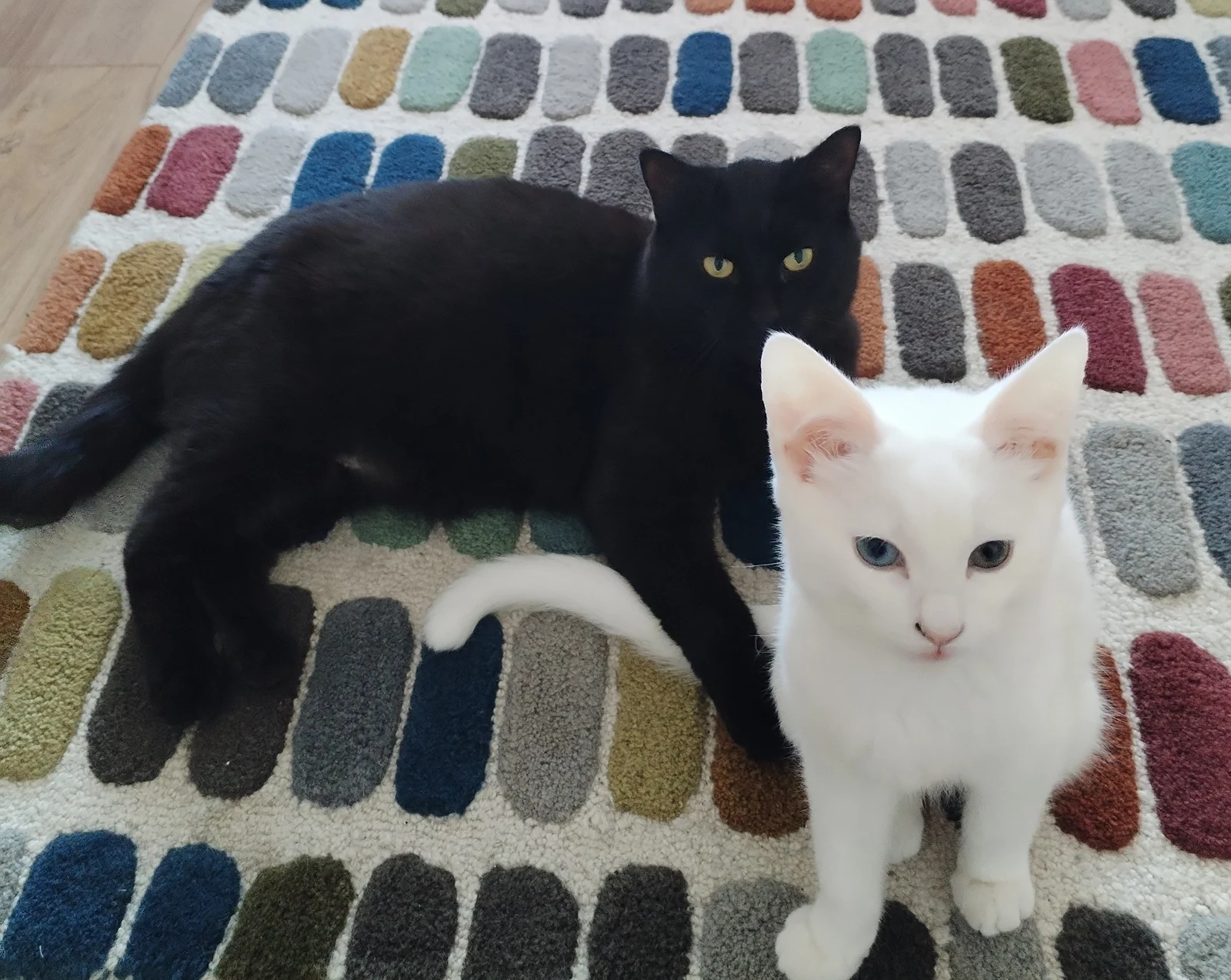
Cosmo and Dusty relaxing together on a rug
Every cat belongs

And let’s celebrate our wonderful moggies.

Whether a cat has a pedigree, a mixed background or a mystery family tree, their personality is entirely their own. Cosmo and Dusty remind us that no two cats are quite alike — and every one has a story worth sharing.

Explore cat stories   ↗

Sources include The International Cat Association, the Governing Council of the Cat Fancy and Cats Protection. If you’re worried about your cat’s health or behaviour, contact your vet.